
Russia’s strategic brown water capability
Part I: The historic development until 2015
By commander German Navy H. Adrians
Abstract
In October 2015, the Russian Navy surprised Western military analysts by launching 30 Kalibr land-attack cruise missiles from small warships in the Caspian Sea at targets in Syria over 1,500 kilometers away. This marked the combat debut of Russia’s 'strategic brown water capability' — the unique capacity to conduct long-range deep precision strikes (DPS) from inland rivers and lakes. Part I of a two-part analysis examines the four historic drivers behind this capability: the creation of the Unified Deep-Water System (UDWS), the strategic shift toward sea-launched cruise missiles post-INF Treaty, shifting power dynamics in the Caspian Sea, and external export programs that accelerated the 'Kalibrization' of Russian light surface combatants. This study addresses a NATO intelligence blind spot with direct implications for the defense of the Baltic Sea region.
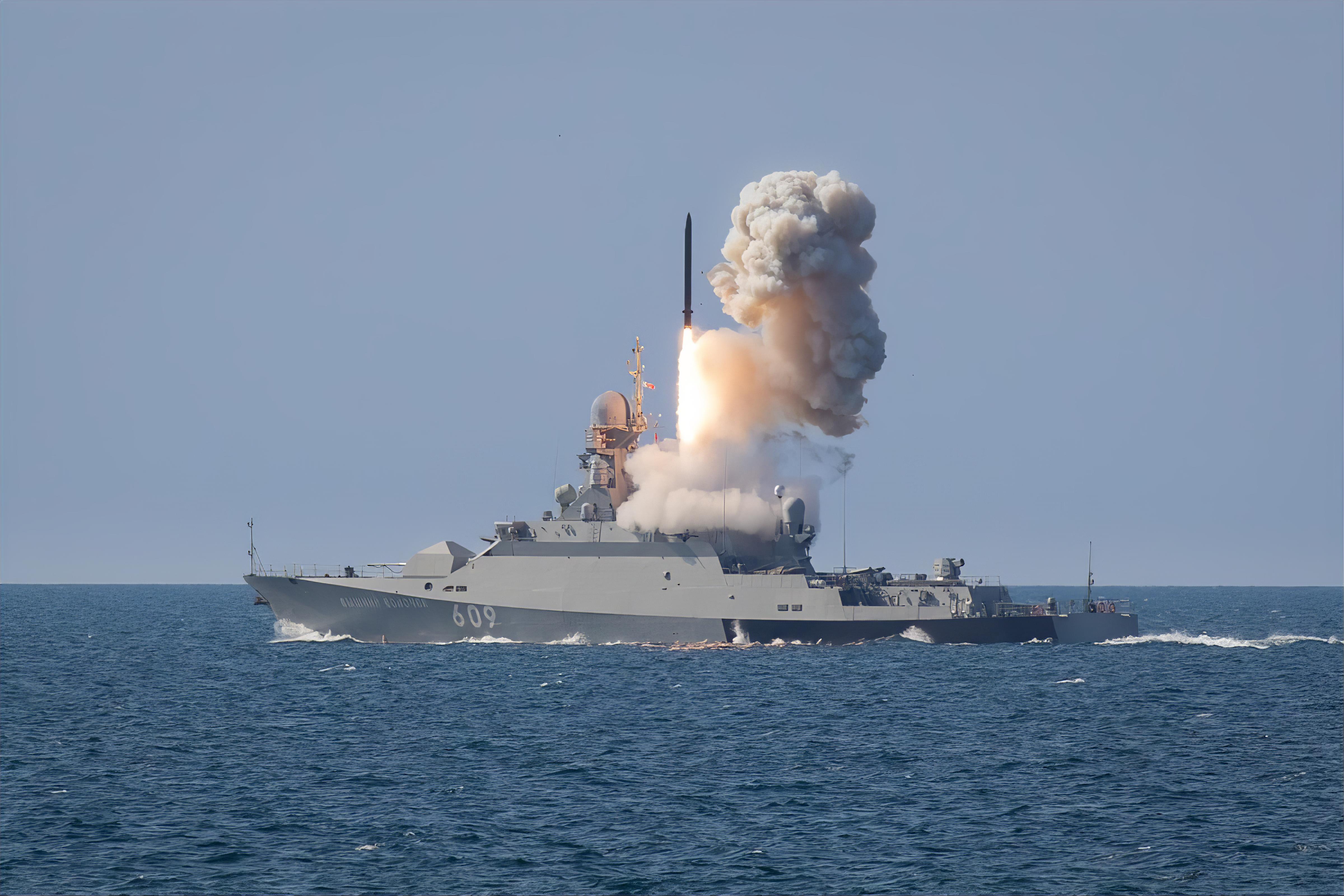 A Russian Kalibr SS-N-27 'Sizzler’ test launch from a the Buyan-M class corvette Vyshniy Volochyok (photo: Russian MoD)
Preface
The Russian Navy possesses the unique capability of conducting deep precision strikes (DPS) from rivers and lakes. This is enabled by small warships that have been equipped with an eight-cell universal vertical launch system (VLS) able to fire land-attack cruise missiles (LACMs) with a range of up to 2.500 kilometers.[i] Although inland waters have traditionally not been considered the environment for this type of operation, and the capability appears to remain internationally unmatched to date, Western media and analysts have paid little attention to it. This has left a blind spot among NATO member states that should be addressed, particularly regarding the defense of the Baltic Sea region and beyond.
This article is the first in a two-part analysis of Russia’s strategic brown water capability and focuses on the historic development until 2015. This study identifies four key drivers, influenced by geographical, industrial, and political shifts that define post-Cold War Russian military doctrine. In the second part, the article shifts to the operational strengths and weaknesses of Russia’s strategic brown water capability, as well as proceedings for countering them.
The emergence of a new long-range strike option
Shortly after Russia’s intervention in the Syrian civil war in September 2015, another development caused concern worldwide. On October 7, a small frigate plus three corvettes launched 30[ii] LACMs of 3M-14 Kalibr (NATO reporting name: SS-N-30A Sagaris)[iii] from the south-western part of the Caspian Sea over Iran and Iraq towards Syria.[iv] This marked the first combat use of both the four warships in their shooter role and the 3M-14 Kalibr.[v] The strike targeted eleven[vi] positions over 1.500 kilometers away in areas controlled by two militant Islamist organizations.[vii] The sudden appearance of the missiles had a significant shock effect, with the Russian warships reportedly not having been located by United States intelligence before.[viii]
What factors enabled the Russian Navy to develop such a capability?
The Kremlin is likely to have anticipated this surprise. It demonstrated not only a new level of operational reach but also revealed a capability that had not existed before. Its significance was immediately emphasized in Russian media, which portrayed the strike as breaking the American and NATO ‘monopoly’ on sea-launched DPS.[ix] Yet the strategic significance of the strike received limited attention in Western expert circles, even though it was launched from an inland body of water, accessible from the sea only via a river. And despite it was using a (conventional) missile, reportedly capable of carrying a nuclear warhead.[x] The key question, therefore, should have been: what factors enabled the Russian Navy to develop such a capability?
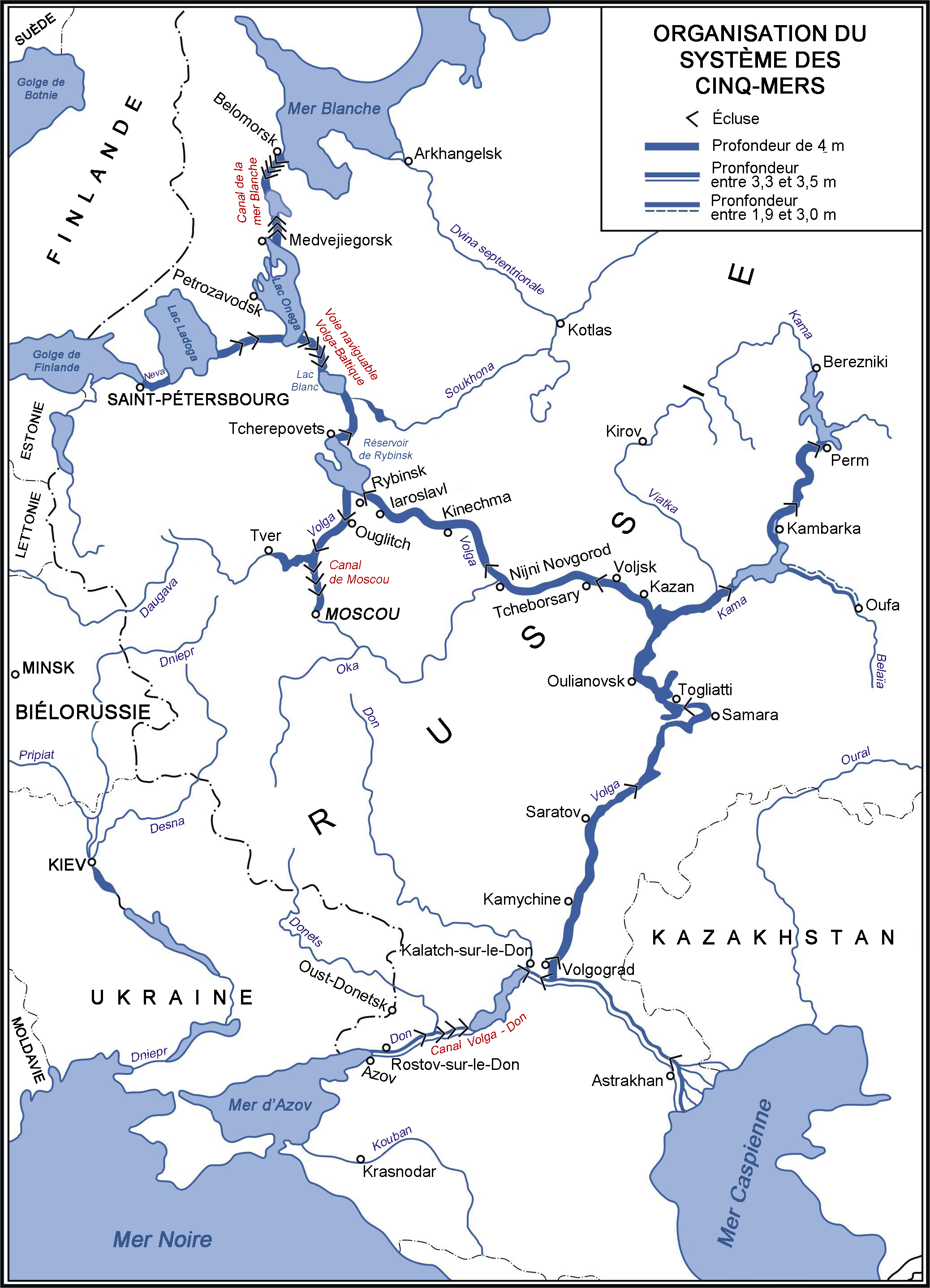 Map op the UDWS, click to enlarge (source: Wikimedia Commons)
The evolution of Russia’s strategic brown water capability
In terms of the operational geography of the maritime domain, inland waters constitute what is commonly referred to as the brown water zone.[xi] Russia’s build-up of a non-nuclear but nonetheless strategically significant strike capability there has multiple origins that appear to have been insufficiently studied to this day. Viewed retrospectively, the development can be reconstructed as a four-phase process, each shaped by distinct drivers that progressively enabled its emergence.
The creation of the UDWS
The first driver behind Russia’s current strategic brown water capability was the systematic integration of rivers and lakes west of the Ural Mountains into an interconnected inland waterway network, starting from the 1930s. At the core of this aquatic complex is the Volga, Europe’s longest river, which drains into the Caspian Sea. Through the construction and expansion of a series of canals, the Volga was subsequently linked to the Baltic Sea and the White Sea in the north, as well as to the Sea of Azov in the south, an extension of the Black Sea. The resulting vast network is today referred to in academic literature as the Unified Deep-Water System of European Russia (UDWS).[xii]
Although the UDWS is primarily intended to promote the socioeconomic development of the then-Soviet hinterland,[xiii] they provided the navy with two strategic advantages: the transfer of warships between the five seas without passing through foreign or international waters, and the ability to construct, maintain, and transfer materiel at a considerable distance from Western Europe, offering a degree of protection in the event of conflict. Both advantages were recognized by the US early in the Cold War.[xiv]However, their principal response focused largely on monitoring the situation, initially through reconnaissance aircraft. Later increasingly through satellites.
The emphasis for sea-based, long-range cruise missiles
The second driver behind the development of Russia’s capability to conduct DPS from inland waters was the growing importance of cruise missiles from the late 1970s onward. The United States and the Soviet Union revived cruise missiles – especially air- and sea-launched variants – as a distinct class of strategic offensive weapons.[xv] By the second half of the 1980s, these missiles were also considered precision weapons intended to engage particularly important, small-sized targets with conventional warheads.[xvi]
In the Soviet Navy, cruise missiles gained increased attention in the context of two bilateral arms control agreements with the US. The Intermediate-Range Nuclear Forces (INF) Treaty, negotiated from 1980 and signed in 1987,[xvii] prohibited the development, production, possession, and deployment of ground-launched ballistic and cruise missiles with ranges between 500 and 5.500 kilometers.[xviii] The Strategic Arms Reduction Treaty (START; later renamed START I), negotiated from 1982 and signed in 1991,[xix] imposed extensive numerical limits on strategic offensive weapons, including ground-, and submarine-launched intercontinental ballistic missiles (ICBMs) as well as heavy bombers.[xx]
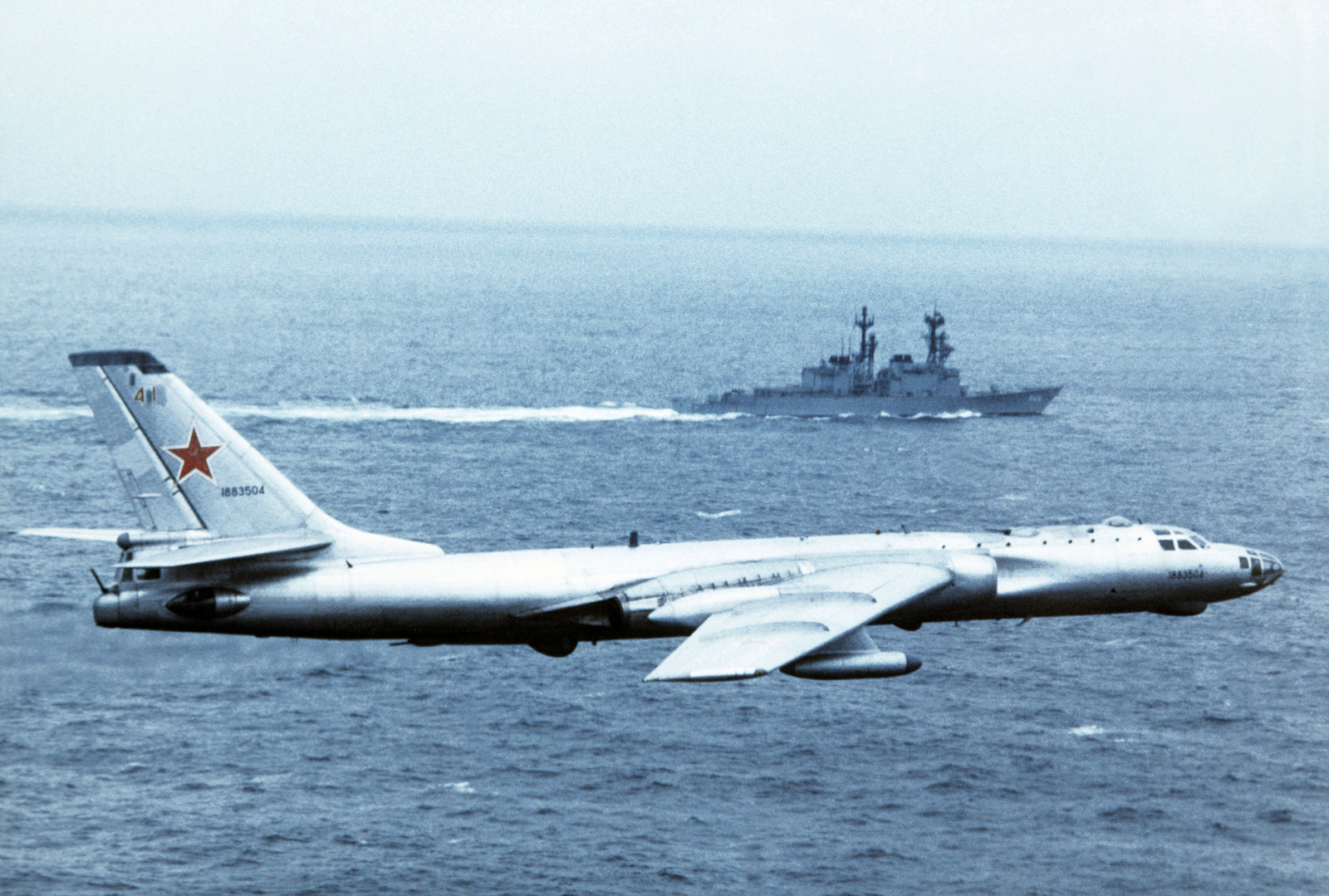 A Russian Tupolev Tu-16 heavy bomber flies over the American destroyer USS Hewitt (source: Wikimedia Commons)
Sea-based cruise missiles, by contrast, were largely outside the treaties’ central limitations.[xxi] Thus, the Soviet Navy turned its interest to those as an alternative means of delivering long-range firepower. Their relatively low cost and suitability for salvo employment offered a way to offset their subsonic speed compared with faster but more expensive ballistic missiles.[xxii]
Moscow did not initially exploit this legal gap. The dissolution of the Soviet Union in 1991, economic turmoil and severe budgetary constraints made comprehensive modernization of the armed forces largely unfeasible. Rather than replacing its inherited force structure, the Kremlin therefore prioritized the preservation of capabilities considered essential to national security. This meant placing particular emphasis on the survival of the strategic submarine force as the maritime component of their nuclear deterrence.[xxiii]
The ‘fall of the iron curtain’ did not herald an ‘end of history’.
Although this period was characterized by financial and institutional weakness, it also affected Russian naval doctrine and capabilities. Regarding the conduct of DPS from the sea, this development was driven by two key circumstances. First, the collapse of the Soviet Union coincided with another profound shock: the Second Gulf War. Operation Desert Storm offered Soviet observers a clear demonstration of US military capabilities, exposing the widening capability gap and the implications of long-range precision strikes.[xxiv] Further US or US-led operations during the 1990s – most notably NATO’s intervention in Kosovo in 1999[xxv] – reinforced among Russian political and military elites a sense of having lost the Cold War.[xxvi] The ‘fall of the iron curtain’ thus did not herald an ‘end of history’. Instead, the United States remained the dominant power in the international system, contributing to a growing sense of strategic vulnerability in Russian security thinking.
Second, the stern measures of the new Russian Federation led to the decommissioning of numerous vessels, most notably large surface combatants including relatively new ones,[xxvii] while many planned replacements were either cancelled or delayed for years.[xxviii] As a result, Russia’s ability to project naval power into the so-called ‘far sea zone’ (between 1.000 and 2.000 kilometers off the coast)[xxix] was significantly reduced,[xxx] undermining its forward-defense posture.[xxxi] The navy therefore increasingly had to rely on the forces available to it for operations in the ‘coastal zone’ and the ‘near sea zone’ (up to approximately 600 to 1.000 kilometers off the coast)[xxxii].[xxxiii] Both circumstances led the Russian Navy to recognize the growing need for long-range conventional cruise missiles,[xxxiv] whose development for domestic purposes, initiated in the 1980s,[xxxv] was nevertheless delayed.
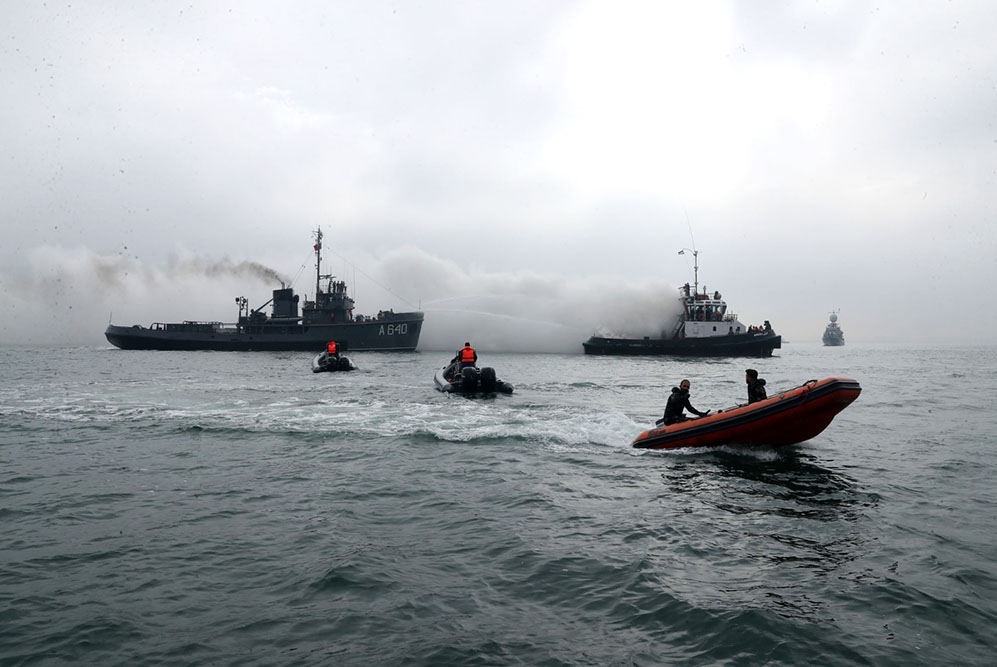 Exercise with naval forces of the Azerbaijan Army and the Army of the Islamic Republic of Iran in the Caspian Sea, November 2024 (photo: Azerbeijan MoD)
The strategic environment in the Caspian Sea
The third driver was the changing regional order in the Caspian Sea, the world’s largest inland body of water. For more than a century, the lake has been shared between Russia and Iran. This bilateral order consolidated through treaties from the early twentieth century onward. Among the factors contributing to this stability was the Kremlin’s perception of Persia, and later Iran, as a relatively weak power.[xxxvi] Combined with the Caspian Sea’s distance from the West, this made the lake a suitable testing site for new weapons systems until 1991.
The dissolution of the Soviet Union fundamentally altered this arrangement, as Azerbaijan on the western shore as well as Kazakhstan and Turkmenistan along the eastern shore emerged as three additional littoral states. Seeking to reduce their dependence on Moscow, these newly independent republics turned to the Caspian’s oil and gas resources, for which they relied on foreign capital and expertise. The resulting competition over the exploitation of these resources raised fundamental questions over the Caspian’s legal status and the delimitation of maritime boundaries. Although de facto a lake, its sheer size raised the question of whether the law of the sea should apply, with implications not only for the distribution of rights to exploit the seabed but also for access by non-littoral states.
Moscow perceived this as a threat to its traditional hegemony in the region.
Moscow perceived this as a threat to its traditional hegemony in the region, a position additionally challenged by the First Chechen War. The Caspian Flotilla, already neglected during the Cold War, was weakened by the 1992 division. Russia lost its headquarters in Baku, the capital of newly independent Azerbaijan, who acquired a substantial share of the warships. From 1994, the Russian Navy responded by reinforcing the flotilla with units transferred from other fleets.[xxxvii] At the same time, the three Turk states began developing their own maritime forces,[xxxviii] thereby further loosening military ties with their larger neighbor.
After Vladimir Putin came to power in 1999, Russia resumed the adoption of strategic documents. One year later, the government issued the Naval Policy Fundamentals for the period until 2010. Among other issues, the guideline classified unresolved questions of international law affecting parts of the Black, Azov and Caspian seas as a security concern[xxxix] and advocated a regionally differentiated approach.[xl] Regarding the latter, Putin pointed to the growing presence of foreign powers, specifically Great Britain, Türkiye and the United States, which he attributed in part to Russia’s previous absence from the Caspian region.[xli] The 2001 Maritime Doctrine subsequently incorporated the principle of the guideline into a distinctly regional framework for Russian maritime policy.[xlii]
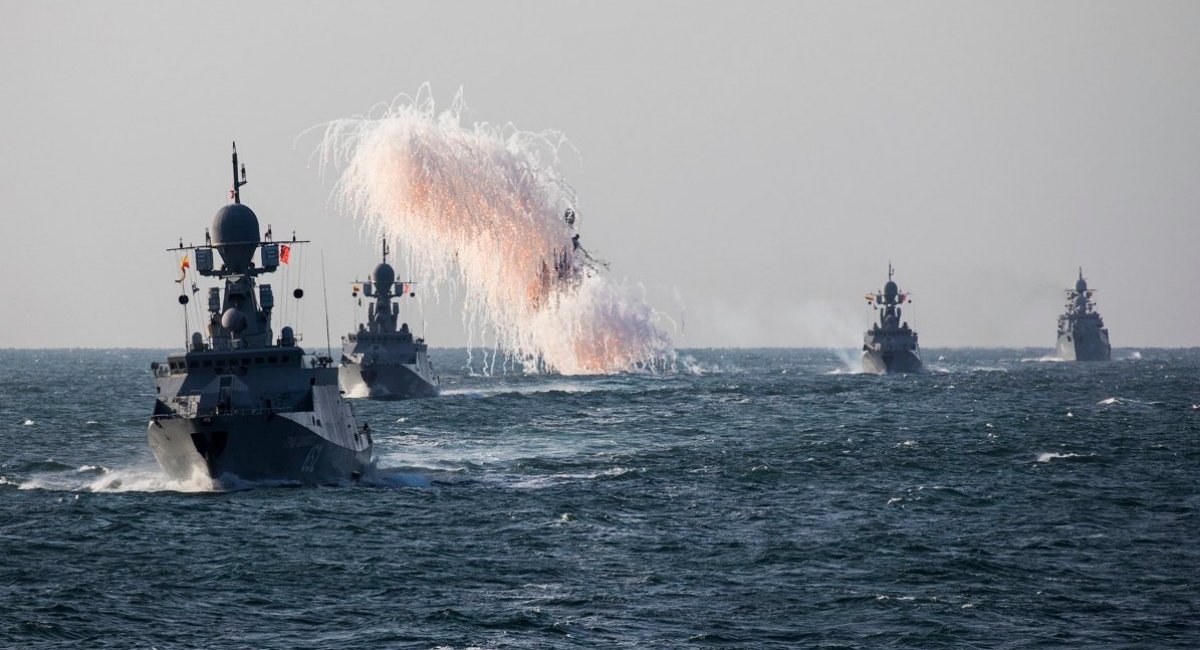 Units of the Russian Caspian Sea Flotilla (photo: Russian MoD)
With support from the Republic of Tatarstan,[xliii] the Russian Navy brought the long-delayed frigate Tatarstan (project 11661K, Gepard-class) to completion: developed in the early 1980s[xliv] and laid down in 1993, construction resumed in 2001, and the vessel entered service with the Caspian Flotilla as its new flagship in 2003.[xlv]At the same time, the Navy sought new vessels for patrol duties in the shallow waters of the lower Volga Delta and the northern Caspian. Following a competition in 2003, construction of the prototype Astrakhan (project 21630, Buyan-class) began in 2004.[xlvi] It joined the flotilla in 2006, while the construction of her two sister ships – laid down in 2005 and 2006 – was delayed until 2011 and 2012. Mainly due to funding constraints,[xlvii] difficulties in obtaining components,[xlviii] and reported uncertainty over their appropriate armament as the security environment of the Caspian Sea evolved.[xlix]
External driver
The final driver for the build-up of Russia’s strategic brown water capability, and arguably the most decisive one, has received comparatively little attention in Western literature and remains understudied. It appears to have originated outside Russia.
As domestic orders for warships declined during the 1990s, Russian shipyards continued to attract foreign demands. In 1997 for instance, India signed a contract for three frigates. Although derived from a Soviet-era type (project 1135.1, Krivak III-class),[l]they were substantially modernized with enhanced stealth characteristics and advanced weapon systems,[li] including the universal VLS 3S-14E and the anti-ship cruise missile Klub-N,[lii] an export variant of the Kalibr family of missiles.
Earlier absence of a universal VLS represented a significant capability gap vis-à-vis the US Navy.
Earlier absence of such a universal VLS represented a significant capability gap vis-à-vis the US Navy. Although the development of the 3S-14 can be traced back to the 1980s,[liii] its introduction was considerably delayed like many other armament programs of the period.[liv] Some Soviet ships were already capable of launching missiles vertically, but these systems were generally designed for specific missile types and thus offered considerably less flexibility than the American Mk41. Moreover, many missiles in the Soviet arsenal were not designed for vertical storage and launch, further limiting the flexibility of existing arrangements.
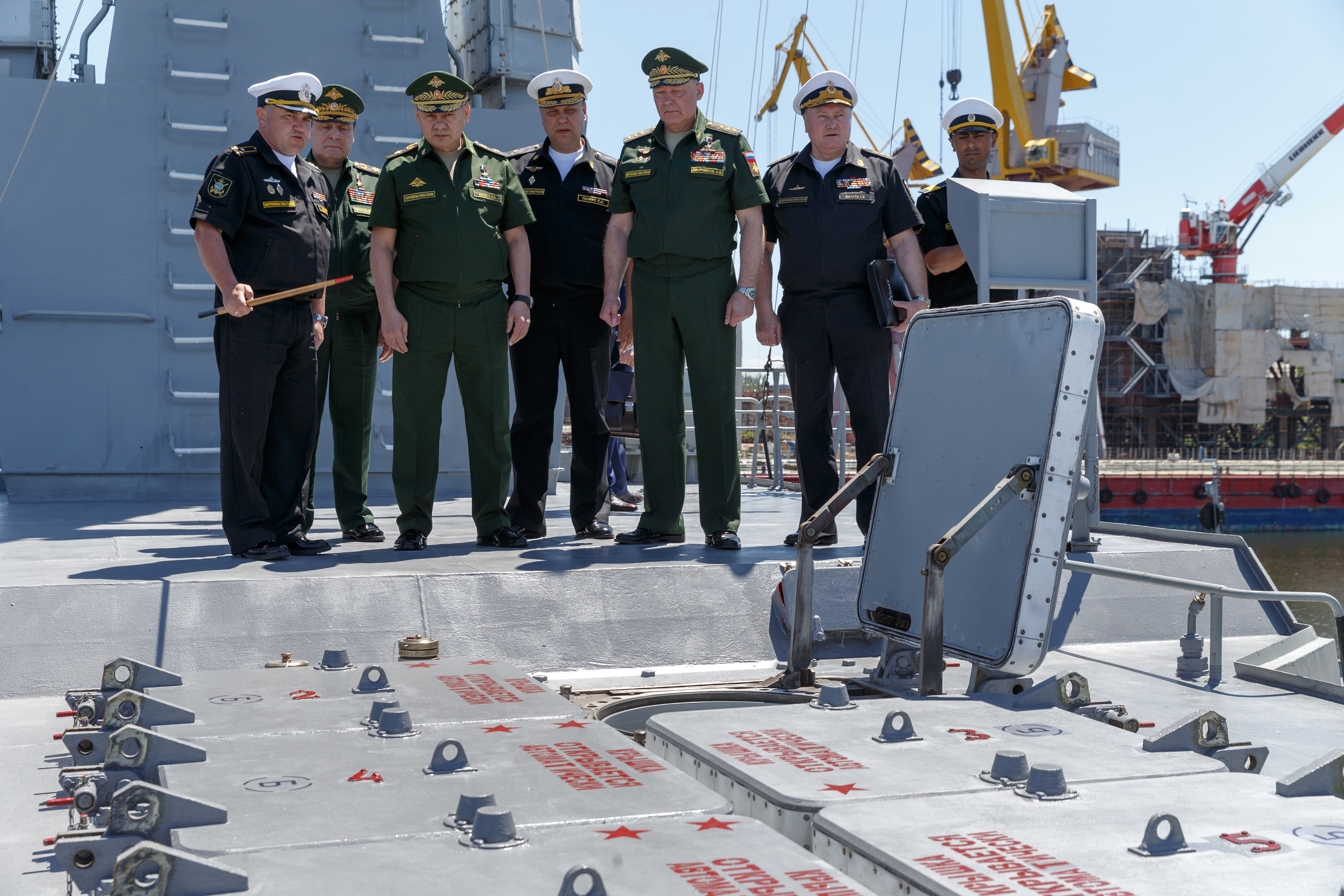 Then Russian minister of Defense Sergey Shogun inspects the 3S-14 VLS on the corvette Grad Sviyazhsk, June 2017 (photo: Russian MoD | Mil.ru)
Accordingly, the three frigates for India (project 1135.6, Talwar-class), built from 1999 and completed in 2002, incorporated capabilities not yet fielded by the Russian Navy itself. This gap was reportedly brought to Putin’s attention.[lv] Accordingly, equipping warships with VLS became one of the priorities in 2006, when the Russian president approved the State Armament Program for 2007-2015.[lvi] As VLS provided the necessary launch architecture for the Kalibr family aboard warships. This can therefore be regarded as the theoretical beginning of the Russian Navy’s ‘Kalibrization’[lvii] and its long-standing pursuit of a sea-based long-range cruise-missile capability.
The first steps of ‘Kalibrization’ in the Caspian Sea
The first surface combatant to receive the 3S-14 was the second Gepard-class frigate Dagestan. Like her sister ship Tatarstan, she had been laid down early 1990s, but her construction was subsequently delayed for many years. Apart from uncertainty over funding, the ships had also come under criticism within the navy for carrying insufficient armament given their size.[lviii] The prolonged construction period may have provided an opportunity to revise Dagestan’s weapons configuration. After being launched in 2011 and completing her trials, she was finally commissioned in 2012 and assigned to the Caspian Flotilla as part of the State Armament Program for 2011-2020.[lix]
Meanwhile, despite the official praise for Astrakhan, the Buyan-class was also not without criticism. On a Russian internet forum, for example, users questioned what operational problem the ship was intended to address, [lx] while a Russian naval officer criticized the absence of dedicated anti-ship missiles.[lxi] This shortcoming appears to have contributed to the subsequent decision to produce a modified batch. Plans for new ships (project 21631, Buyan-M-class; NATO-reporting name: Sviyazhsk)[lxii] were already reported in 2009, although development presumably started earlier. By 2008,[lxiii] an export variant closely derived from the Buyan design (project 21632, Tornado-class) had already been offered in several configurations, albeit without a VLS.[lxiv]
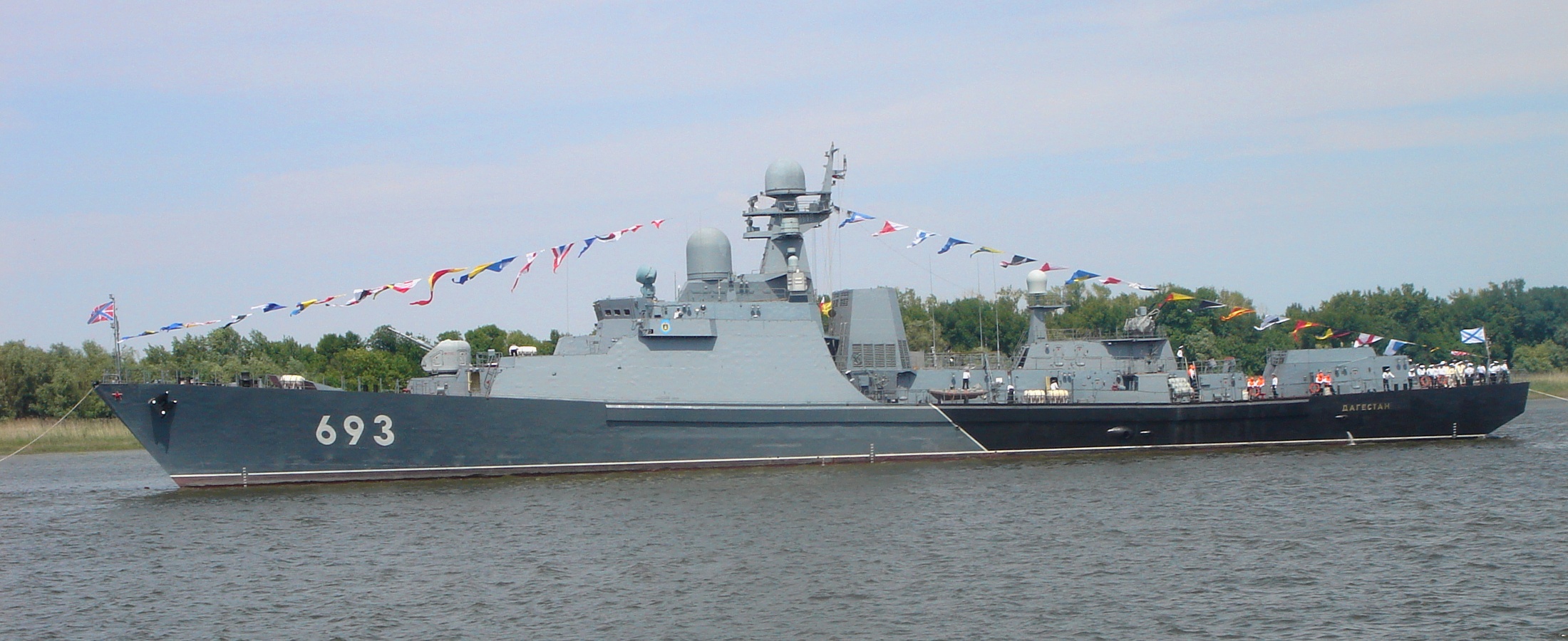 Russian Gepard class frigate Dagestan (source: Wikimedia Commons)
The Russian Navy formally awarded the contract to the Zelenodolsk Shipyard at the Volga in 2010,[lxv] and the lead ship of the Buyan-M-class, Grad Sviyazhsk, was laid down that same year.[lxvi] Like Dagestan, she was fitted with the 3S-14 VLS, which resulted in a longer hull than that of Astrakhan, while her self-defense against air threats was also enhanced.[lxvii]
By 2012, the prospect of Russia conducting DPS from inland waters had already become apparent: Shortly after entering service, Dagestan successfully tested a variant of the Kalibr missile family against a surface target in the Black Sea.[lxviii] She subsequently transited to the Caspian Sea via the Volga–Don Canal, where she demonstrated her land-attack capability during the large-scale exercise Kavkaz 2012 by engaging a small target several hundred kilometers away.[lxix]
Exercises involving missile launches continued throughout 2013, and in 2014 Grad Sviyazhsk and her first sister ship Uglichparticipated in such drills both before and after their commissioning.[lxx] Observers had for some time questioned whom these activities were actually intended to target.[lxxi] In the aftermath of Russia’s occupation and annexation of Crimea in spring 2014, Western media increasingly interpreted the activities in the Caspian Sea as a broader demonstration of power.[lxxii]
Development of the strategic brown water capability should be understood as a distinct trajectory within the Russian Navy’s ‘Kalibrization’.
Likewise, Russia’s 2015 strikes against targets in Syria from the Caspian Sea – launched by Dagestan, as well as Grad Sviyazhsk, Uglich and their sistership Velikiy Ustug, commissioned in late 2014 – were understood in the West as a demonstration of power, and indeed they served this purpose. Although the use of LACMs was reportedly more costly than two weeks of air operations,[lxxiii] the Kremlin still opted for them. The choice of the Caspian Sea as the launch site also reflected operational constraints: Shooting from the Black Sea would have entailed overflight of NATO member Türkiye. Also, the Russian Navy did not have LACM-armed warships available in the Mediterranean at the time.[lxxiv]
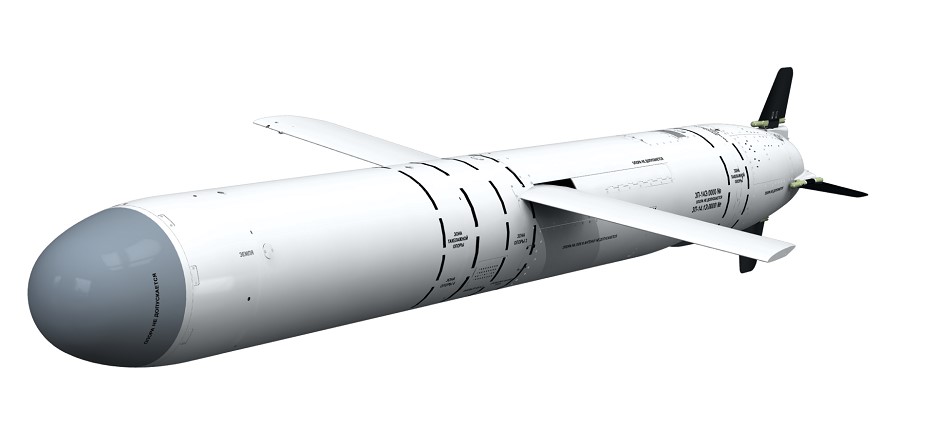 Russian 3M-14 Kalibr (SS-N-30A) sea launched LACM (source: EO Data Integration Network)
Concluding remarks
In retrospect, the evolution of Russia’s strategic brown water capability appears to have been shaped less by long-term planning than by a combination of different circumstances. Nevertheless, equipping river-capable warships with a universal VLS was a creative and clever move, as it served several strategic objectives: most importantly, enabling the defense of Russian territory in depth with conventional long-range cruise missiles despite the constraints imposed by arms reduction and arms control agreements at the time.
As this historical analysis demonstrates, the development of the strategic brown water capability should therefore be understood as a distinct trajectory within the Russian Navy’s ‘Kalibrization’, rather than simply as an element of the broader trend and its associated implications. At the same time, it is important to recognize that this definition constitutes a Western framing. Although the concept accurately captures the phenomenon examined here, there is thus far no corresponding Russian terminology of a ‘strategic brown water capability’.
Commander Helge Adrians MA is a German Navy officer. From April 2024 until September 2026, he served as a Visiting Fellow at the German Institute for International and Security Affairs in Berlin. The views expressed in the article are those of the author and do not reflect the official position of the German Ministry of Defence, German Armed Forces, German Navy, or that of the German Institute for International and Security Affairs.
 Download this article
Notes
[i] Cf. [US] Department of State, Bureau of Arms Control, Verification and Compliance (2020): 2020 Adherence to and Compliance with Arms Control, Nonproliferation, and Disarmament Agreements and Commitments (Compliance Report), online in: https://2017-2021.state.gov/wp-content/uploads/2020/06/2020-Adherence-to-and-Compliance-with-Arms-Control-Nonproliferation-and-Disarmament-Agreements-and-Commitments-Compliance-Report-1.pdf (PDF file), June 2020 (accessed: 26.12.2024), p. 14 and 16.
[ii] Apparently, only 26 of the 30 missiles launched reached their targets, cf. Мозговой, A. (2016): Универсальный “Калибр”, in: Морской сборник, No. 1/2016, p. 61-70, here: p. 66; and cf. Gressl, Gustav (2016): Lessons from Russia’s intervention in Syria. What do we know about Russian military capabilities from the Syria conflict?, online in: https://ecfr.eu/article/commentary_lessons_from_russias_intervention_in_syria5085/, 05.02.2016 (accessed: 09.08.2026).
[iii] The term “Sagaris” does not yet seem to be widely accepted, but it is already being used by some official sources; see, e.g., the post by the UK MoD in https://x.com/DefenceHQ/status/1656912643943178240, 12.05.2023 (accessed: 23.08.2026).
[iv] Cf. Интерфакс (2015): Каспийская флотилия выполнила 26 пусков по целям ИГ и “Джабхат ан-Нусра”, online in: https://www.interfax-russia.ru/south-and-north-caucasus/main/kaspiyskaya-flotiliya-vypolnila-26-puskov-po-celyam-ig-i-dzhabhat-an-nusra, 07.10.2015 (accessed: 23.08.2026).
[v] Cf. Menks, Joshua/Petersen, Michael B. (2022): The ‘Kalibrization’ of the Russian Fleet, online in: https://www.usni.org/magazines/proceedings/2022/may/kalibrization-russian-fleet, May 2022 (accessed: 16.08.2026).
[vi] Cf. Кирокосьян, M. (2022): Каспийская флотилия. 300 лет на службе Отечеству, in: Морской сборник, No. 11/2022, p. 50-53.
[vii] Cf. Marcus, Jonathan (2015): Russian missiles ‘hit IS in Syria from Caspian Sea’, online in: https://www.bbc.com/news/world-middle-east-34465425, 07.10.2015 (accessed: 19.08.2025).
[viii] Cf. Мозговой (2016), p. 70.
[ix] Cf., e.g., the comment by Dmitry Glukhov, qtd. in: Латыпов, Тимур (2015): Как зеленодольские «Буяны» в Сирии поздравили Путина с днем рождения, online in: https://www.business-gazeta.ru/article/142682, 07.10.2015 (accessed: 18.08.2026).
[x] Cf. Barrie, Douglar/Waldwyn, Tom (2017): NASIC 2017 report suggests service entries, missile modifications and new nomenclature, online in: https://www.iiss.org/online-analysis/military-balance/2017/06/nasic-2017/, 28.06.2017 (accessed: 09.08.2026).
[xi] The colour-coded taxonomy of maritime geography became widely known primarily through the US “Naval Operations Concept” of 2010, cf. U.S. Department of the Navy (2010). Naval Operations Concept 2010: Implementing the Maritime Strategy, online in: https://www.marines.mil/portals/1/Publications/Naval%20Operations%20Concept%202010.pdf (PDF file), 2010 (accessed: 16.04.2026), p. 8.
[xii] Cf. Jaghdani, Tinoush Jamali/Ketabchy, Mehdi (2023): The Strategic Significance of the Russian Volga River System, in: Russian Analytical Digest, Vol. 304, pp. 22-27, here: p. 22, also online in: https://www.ssoar.info/ssoar/bitstream/handle/document/91435/ssoar-russanald-2023-304-jaghdani_et_al-The_Strategic_Significance_of_the.pdf (PDF file), p. 2.
[xiii] Cf., e.g., Winter, A. (1951): The Great Construction Works of the Soviet Union, in: Id., Moscow: A.U.C.C.T.U., p. 5-18, here: p. 5, also online in: https://dai.mun.ca/PDFs/radical/TheGreatConstructionWorksoftheSovietUnion.pdf (PDF file), no date (accessed: 24.08.2026), p. 7.
[xiv] Cf., e.g., Possony, Stefan (1947): European Russia's Inland Waterways - Past, Present, and Future, online in: https://www.usni.org/magazines/proceedings/1947/august/european-russias-inland-waterways-past-present-and-future, no date (accessed: 27.08.2025) and Dudley, H. G. (1962): The Future Role of Soviet Sea Power, online in: https://www.usni.org/magazines/proceedings/ 1966/may/future-role-soviet-sea-power, no date (accessed: 27.08.2025).
[xv] Cf. Савченко, О. В./Половинкин, В. Н. (2023): История, современное состояние и перспективы развития. Kрылатых ракет морского базирования ВМС стран мира, in: Морское оборудование и технологии, No. 1 (34), 2023, p. 77-97, here: p. 87.
[xvi] Cf. ibid.
[xvii] See the narrative of the INF Treaty, ed. by [US] Department of State, Bureau of Arms Control, Verification and Compliance, online in: https://2009-2017.state.gov/t/avc/trty/102360.htm, no date (accessed: 17.08.2026).
[xviii] Cf. ibid., see Art. II 5 in the original text.
[xix] Cf. Center for Army Control and Non-Proliferation (2022): Strategic Arms Reduction Treaty (START I), online in: https://armscontrolcenter.org/wp-content/uploads/2022/11/START-I-Fact-Sheet.pdf (PDF file), 16.11.2022 (accessed, 17.08.2026), p. 1.
[xx] See Art. II of START, online in: https://1997-2001.state.gov/www/global/arms/starthtm/start/start1.html, 20.01.2001 (accessed: 17.08.2026).
[xxi] Regarding the INF Treaty, cf. Yost, David S. (1989): Controlling Sea-launched Cruise Missiles. The Most Difficult Question, online in: https://www.usni.org/magazines/proceedings/1989/september/controlling-sea-launched-cruise-missiles-most-difficult, no date of upload (accessed: 09.08.2026).
[xxii] Cf. Bogdanov, Konstantin/Kramnik, Ilya (2018): The Russian Navy in the 21st Century. The Legacy and the New Path, online in: https://www.cna.org/reports/2018/10/IOP-2018-U-018268-Final.pdf (PDF file), October 2018 (accessed: 11.08.2026), p. 8 f. and p. 14.
[xxiii] Cf. Tsypkin, Mikhail (2002): Rudderless in a Storm. The Russian Navy 1992-2002 (=Conflict Studies Research Centre, B58), online in: https://www.files.ethz.ch/isn/96480/02_Dec.pdf (PDF file), no date (accessed: 19.02.2026), p. 5.
[xxiv] Cf. Gareev, Makhmut/Slipchenko, Vladimir (2005): Future War, ed. by Kipp, Jacob W. (2007), Kansas: Fort Leavenworth, Foreign Military Studies Office, p. 12 and p. 17 ff.
[xxv] Cf. Hryb, Olexander (2025): Understanding Contemporary Russian Militarism. From Revolutionary to New Generation Warfare, Hannover/Stuttgart: ibidem, p. 113.
[xxvi] Cf., e.g., Ponarin, Eduard/Sokolov, Boris (2014): The Russian Elite’s View of Global Politics, online in: https://eng.globalaffairs.ru/articles/the-russian-elites-view-of-global-politics/, 18.12.2014 (accessed: 26.08.2026).
[xxvii] Cf. Gogin, Ivan (2024): Fighting ships of the SOVIET / RUSSIAN NAVY 1945 – 2025. Vol. I Submarines, Wrocław: Gatchina, p. 21.
[xxviii] Cf. Tsypkin (2002), p. 5.
[xxix] Cf. Kofman, Michael (2023): Evolution of Russian naval strategy, in: The sea in Russian strategy, eds. by Monaghan, Andrew/Connolly, Richard (2023), Manchester: Manchester University Press, p. 94-123, here: p. 108.
[xxx] Cf. Adrians, Helge (2026): Russlands begrenzte Fähigkeiten zum Schutz seiner »Schattenflotte«. Deutschlands Handlungsspielräume in der Nordsee und darüber hinaus (=SWP-Aktuell 2026/A 17), online in: https://www.swp-berlin.org/publications/products/aktuell/2026A17_Russlands_Schattenflotte.pdf (PDF file), 17.04.2026 (accessed: 26.08.2026), p. 4 f.
[xxxi] Cf. Ranft, Bryan/Till, Geoffrey (1983): The Sea in Soviet Strategy, Annapolis: Naval Institute Press (2nd Edition, 1989), p. 175.
[xxxii] Cf. Kofman (2023), p. 108.
[xxxiii] Cf. Bogdanov/Kramnik (2018), p. 14.
[xxxiv] Cf. ibid.
[xxxv] Cf. ibid., p. 6 f.
[xxxvi] Cf. Марyев, А. Ю./ Карпенко, А. О. (2009): Военно-политические аспекты формирования интересов России на южном геополитическом векторе, in: Военная мысль, No. 11/2009, p.9-16, here: p. 12.
[xxxvii] Cf. Жаднова, T. (2012): Каспийской флотилии. 290 лет, in: Морской сборник, No. 12/2012, p. 32-38, here: p. 35.
[xxxviii] Cf. Владимирович, Чуприн Константин (2006): От Гюлистанского мира до "Каспийского стража". Военно-морская ситуация на Каспии вчера и сегодня, online in: https://flot.com/nowadays/structure/caspianguard.htm, no date (accessed: 18.08.2026).
[xxxix] See part II, section 6 of Основы политики Российской Федерации в области военно-морской деятельности на период до 2010 года (утв. Президентом РФ от 4 марта 2000 года от 4 марта 2000 г.), online in: https://flot.com/nowadays/concept/osn_napr.htm, no date (accessed: 18.08.2026).
[xl] See part IV, section 1 and 4, as well as part V, section 14 of ibid.
[xli] Cf. German, Tracey (2014): Russia and the Caspian Sea: Projecting Power or Competing for Russia and the Caspian Sea: Projecting Power or Competing for Influence?, online in: https://press.armywarcollege.edu/cgi/viewcontent.cgi?article=1486&context=monographs (PDF file), 08.01.2014 (accessed: 24.08.2026), p. 34 f.
[xlii] See part II, section 1, as well as part III, section 2, subsection “Каспийское региональное направление” of Морская доктрина Российской Федерации на период до 2020 года (утв. Президентом РФ от 27 июля 2001 г.), online in: https://flot.com/nowadays/concept/27-07-2001.htm, no date (accessed: 18.08.2026).
[xliii] Cf. Грицкова, Александра/Лантратов, Константин (2006): Из-под воды достали. Административный ресурс, online in: https://www.kommersant.ru/doc/686179, 04.07.2006 (accessed: 19.08.2026).
[xliv] Cf. Игнатьева, Луиза/Грицкова, Александра/Лантратов, Константин (2005): Вьетнам будут сторожить "Гепарды", online in: https://www.kommersant.ru/doc/619414, 20.10.2005 (accessed: 22.08.2026).
[xlv] Cf. Коммерсантъ (2003): Ракетный корабль «Татарстан» стал флагманом Каспийской флотилии, online in: https://www.kommersant.ru/doc/408206, 02.09.2003 (accessed: 24.08.2026).
[xlvi] Cf. KORABEL.RU (2006): «Судостроительная фирма «Алмаз» завершила государственные испытания артиллерийского корабля «Астрахань» проекта 21630, online in: https://www.korabel.ru/news/comments/sudostroitelnaya_firma_almaz_zavershila_gosudarstvennie_ispitaniya_artilleriyskogo_korablya_astrahan_proekta_21630.html, 27.07.2006 (accessed: 24.08.2026).
[xlvii] Cf. Мокейчева, Мария (2006): Российский "Арсенал" идет на экспорт. ввиду отсутствия госзаказов, online in: https://www.kommersant.ru/doc/714408, 18.10.2006 (accessed: 19.08.2026).
[xlviii] Cf. Лента.Ру (2013): Военные недополучили за год пять кораблей, online in: https://lenta.ru/news/2013/02/21/ships/, 21.02.2013 (updated: 18.02.2026; accessed: 19.08.2026). RIA Novosti is cited as the source of the information.
[xlix] For example, in 2003, Kazakhstan announced the establishment of a naval force as a separate branch of the armed forces, cf. Сокут, Сергей (2003): Каспий стоит войны, online in: https://www.ng.ru/cis/2003-03-04/5_caspian.html, 04.03.2003 (accessed: 19.08.2026). In addition, Azerbaijan conducted naval exercises with the United States in 2003 and 2004, cf. Манвелян, Армен (2008): Статус Каспийского моря и напряженность в отношениях Туркменистан–Азербайджан–Иран, online in: https://www.rni.am/rus/articles/security/detail.php?ELEMENT_ID=2776, 09.06.2008 (accessed: 19.08.2026). Consequently, there have been fears in Russia that the United States might establish a permanent military presence in the Caspian Sea, cf. РИА Новости (2005): США в каспийском регионе и позиция России, online in: https://ria.ru/20050428/39756448.html, 28.04.2005 (accessed: 19.08.2026).
[l] See the data sheet on the Indian defense portal Bharat Rakshak (2003): Talwar (Krivak III) Class, online in: https://www.bharat-rakshak.com/navy/equipment/specs/talwar-class/, 18.06.2003 (accessed: 17.08.2026).
[li] Cf. Барабанов, Михаил (2011): “Викрамадитья”, “БраМос”, “Тришул” и другие проекты для Индии, online in: https://nvo.ng.ru/armament/2011-04-08/8_india.html, 08.04.2011 (accessed: 17.08.2026).
[lii] Cf. Интерфакс (2002): Второй строящийся на Балтийском заводе по заказу индийских ВМС фрегат укомплектован вооружением, online in: https://www.interfax-russia.ru/military/news/82019, 29.04.2002 (accessed: 18.08.2026).
[liii] Cf. Bogdanov/Kramnik (2018), p. 6 f.
[liv] See the information in the Russian-language website under the heading “Универсальные пусковые установки серии 3С-14”, online in: https://missilery.info/missile/91re/3c14, no date (accessed: 11.08.2026).
[lv] Cf. Тимохин, Александр (2019): США выводят из игры целый класс российских боевых кораблей, online in: https://vz.ru/society/2019/10/8/1001669.html, 08.10.2019 (accessed: 16.08.2026).
[lvi] See the statement by the then Commander-in-Chief of the Navy, Admiral of the Fleet Vladimir Masorin, cf. Фатигаров, Василий/Гавриленко, Андрей (2006): Развитие флота — задача государственная, online in: https://rusk.ru/st.php?idar=421384, 29.07.2006 (accessed: 19.08.2026).
[lvii] The term was likely coined by Bogdanov/Kramnik (2018), p. 14.
[lviii] Cf. Игнатьева, Луиза/Грицкова, Александра/Лантратов, Константин (2005): Вьетнам будут сторожить "Гепарды", online in: https://www.kommersant.ru/doc/619414, 20.10.2005 (accessed: 22.08.2026).
[lix] Cf. Сотов, Александр (2012): 16 новых кораблей войдут в Каспийскую флотилию к 2020 году, online in: https://rg.ru/2012/02/07/flotiliyu-site-anons.html, 07.02.2012 (accessed: 23.08.2026).
[lx] See the first user comments from 2009 in the thread “МАК проект 21630 и МРК проекта 21631 (Буян-М)” in https://rusarmy.com/forum/threads/mak-proekt-21630-i-mrk-proekta-21631-bujan-m.7011/, no date (accessed: 23.08.2026).
[lxi] Ctd. by Хайруллин, Шамиль (2009): Командир "продвинутого" корабля, online in: https://flot.com/nowadays/structure/caspian/cherokov.htm, 09.12.2009 (accessed: 22.08.2026). The interview is said to have originally appeared in “Красная звезда”.
[lxii] Cf. Wertheim, Eric (2024): Russia’s Buyan Naval Corvette Program, online in: https://www.usni.org/magazines/proceedings/2024/december/russias-buyan-naval-corvette-program, December 2024 (accessed: 24.08.2026).
[lxiii] Cf. ТАСС (2008): Казахстан приобретет у России шесть малых ракетно-артиллерийских кораблей проекта 21632 “Торнадо”, online in: https://vpk.name/news/22073_kazahstan_priobretet_u_rossii_shest_malyh_raketno-artilleriiskih_korablei_proekta_21632_tornado.html, 31.10.2008 (accessed: 23.08.2026).
[lxiv] Cf. Федоров, Александр (2010): Грозный «Торнадо», in Национальная оборона, Vol. 3/2010.
[lxv] Cf. Хайруллин, Шамиль (2013): Знакомьтесь: «Град Свияжск», online in: https://vpk.name/news/94464_znakomtes_grad_sviyazhsk.html, 08.08.2013 (accessed: 24.08.2026). The article is said to have originally been published in “Красная звезда”.
[lxvi] Cf. Латыпoв, Тимур (2016): ОАО «Зеленодольский завод имени А. М. Горького», in: Экспорт вооружений, No. 2 (123), March-April 2016, p. 46-53, here: p. 51.
[lxvii] Cf. Василий, Алишин (2010): Заложен “Супер-Буян”, in: Национальная оборона, No. 8/2010.
[lxviii] Cf. PortNews (2012): Корабль «Дагестан» в ходе госиспытаний в Черном море произвел ракетные стрельбы, online in: https://portnews.ru/news/print/137241/, 25.05.2012 (accessed: 23.08.2026); Дагиев, Ахмед (2012): Ракетный корабль "Дагестан" будет охранять акваторию Каспия, online in: https://rg.ru/2012/06/07/reg-skfo/fregat-anons.html, 07.06.2012 (accessed: 24.08.2026).
[lxix] Cf. Безменов, Александр (2012): Каспийская флотилия пополнилась новым ракетным кораблем, online in: https://rg.ru/2012/07/13/reg-ufo/rkdagestan-anons.html, 13.07.2012 (accessed: 24.08.2026).
[lxx] Statement by the Russian MoD, published by flot.com under “Корабли Каспийской флотилии приступили к тактическим учениям”. The original page no longer exists, but it has been archived in https://web.archive.org/web/20140508224108/http://flot.com/news/navy/index.php?ELEMENT_ID=165504, 08.05.2014 (accessed: 24.08.2026). In addition, there were other exercises that year, cf., e.g., PortNews (2014): Корабли Каспийской флотилии вышли в море на учение, online in: https://portnews.ru/news/186823/, 10.09.2014 (accessed: 24.08.2026).
[lxxi] Cf. German (2014), p. 43 f.
[lxxii] Cf., e.g., MacAskill, Ewen (2014): Putin's military exercises are more than a game, online in: https://www.theguardian.com/world/2014/apr/23/putin-military-exercises-ukraine-border, 23.04.2014 (accessed: 24.08.2026).
[lxxiii] Cf. Козлов, Петр/Никольский, Алексей (2015): Использовав в Сирии крылатые ракеты, Россия показала свои новые возможности, online in: https://www.vedomosti.ru/politics/articles/2015/10/08/611947-krilatie-raketi-rossiya, 08.10.2015 (accessed: 23.08.2026). The independent online newspaper The Moscow Times estimates that the single strike launched from the Caspian Sea cost at least 36 million Dollar, cf. Hobson, Peter (2015): Calculating the Cost of Russia’s War in Syria, online in: https://www.themoscowtimes.com/2015/10/20/calculating-the-cost-of-russias-war-in-syria-a50382, 20.10.2015 (accessed: 23.08.2026).
[lxxiv] See the statement by Ivan Konovalov, cf. Чунихина, Мария (2015): Почему по Сирии стреляли из Каспийского моря?, online in: https://aif.ru/dontknows/actual/pochemu_po_sirii_strelyali_iz_kaspiyskogo_morya, 08.10.2015 (accessed: 23.08.2026).
Gerelateerd
De onzekere toekomst van het vliegkampschip
De rol van de carrier ondergaat een fundamentele verandering, wat betekent dat de kern van zijn functie, zijn structuur en de unieke…

Tri-marines: vertrouwde en interoperabele partners op het slagveld
Het Korps Mariniers kent een lange geschiedenis en voelt een sterke verbintenis met amfibische families bestaande uit vele bevriende…
The future of Transatlantic relations
In the coming years, the key in the transatlantic relations lies to sail as close to the wind as possible between total commitment and…

